Submeter Replacement and Repair for Apartments
Updated October 2026
Most submeters that stop reading need a new battery or transmitter, and the meter can stay. See when replacement makes sense and what it costs per unit.
Should a broken submeter be repaired or replaced?
Most of the time it can be repaired. When a unit stops reporting, the cause is usually the transmitter battery or the radio link, and a technician can fix that without touching the pipe. Replace the meter if the body leaks, is corroded, or still reads wrong after a test, or if it's a discontinued model nobody makes parts for. When every meter at the property went in the same year and they're starting to fail, one planned replacement costs less than a service call every month. NES does both, on meters we installed and on meters another company put in.
- Most dead meters need a new battery or transmitter
- New water meters average $150 to $300 per unit installed
- Meters and parts in stock, most ship next business day
- Under 30 minutes without water per occupied unit
- Residents billed from actual reads, never estimates
- NES repairs meters other companies installed
It usually starts with a billing report. A few units show zero for the month, or the city bill keeps going up while resident billing stays flat. Someone asks whether the meters are done. Most of the time they aren't, and the fix is smaller than people expect.
Why do submeters stop reading?
A wireless water submeter is really two pieces. The meter body sits on the pipe and measures the water. A small transmitter on top, powered by a battery, sends that reading to a gateway somewhere on the property. The body has very little in it that wears out. The battery is another story, so when a unit goes quiet, check the transmitter first.
One occupied unit reads zero
- Usual cause
- Dead transmitter battery
- Usual fix
- New battery, or a new transmitter if the battery is sealed in. See battery and transmitter replacement.
A whole floor drops out the same day
- Usual cause
- A repeater or gateway lost power, or a renovation blocked its signal
- Usual fix
- Get the repeater powered or move it. The meters are fine.
A reading that never moves
- Usual cause
- Stuck register or a failed magnetic coupling
- Usual fix
- New register on a sound meter, or a new meter
One unit reads far below similar floor plans
- Usual cause
- Worn meter, sediment, or plumbing that bypasses the meter
- Usual fix
- Test it, then repair or replace
Water around the meter or green crust on the fittings
- Usual cause
- Leaking or corroded meter body
- Usual fix
- Replace the meter
Negative or impossible electric usage
- Usual cause
- A current sensor installed backwards
- Usual fix
- Flip the sensor. It's a wiring fix.
No company can read the meters
- Usual cause
- A proprietary system whose vendor left or stopped support
- Usual fix
- Retrofit or replace. See proprietary and discontinued submeters.
Your read history will usually tell you the cause before anyone opens a closet. One unit dropping to zero points to a battery. Twenty units on one floor going quiet on the same day points to a repeater. Our page on common submetering issues covers each one in more detail.
When should a submeter be replaced instead of repaired?
If the meter is dry and tests accurate, repair it. That covers most service calls.
Replace it if water is seeping around it, if the fittings have that green crust, or if a test shows it reading low. Old meters almost always drift low. The resident gets billed for less than they used, and the owner picks up the difference on the master bill. Nobody calls to complain about a bill that's too small, so this can go on for years before anyone notices.
Age matters too. Meter bodies typically last 15 to 20 years and transmitter batteries 10 to 20. A 17-year-old meter with a dead battery is usually worth replacing outright. A 6-year-old one just needs the battery. There's more on this in how long water submeters last.
Dead battery, meter under 10 years old
- What to do
- Replace the battery or transmitter
Meter leaking, corroded, or reading low on test
- What to do
- Replace the meter
Most meters went in the same year and are failing
- What to do
- Plan a phased replacement, building by building
Proprietary or discontinued system
- What to do
- Fit nonproprietary transmitters if the meters are sound, otherwise replace
Manual meters someone reads by hand
- What to do
- Add wireless transmitters or replace. See upgrading manual submeters to wireless.
What happens during a submeter replacement?
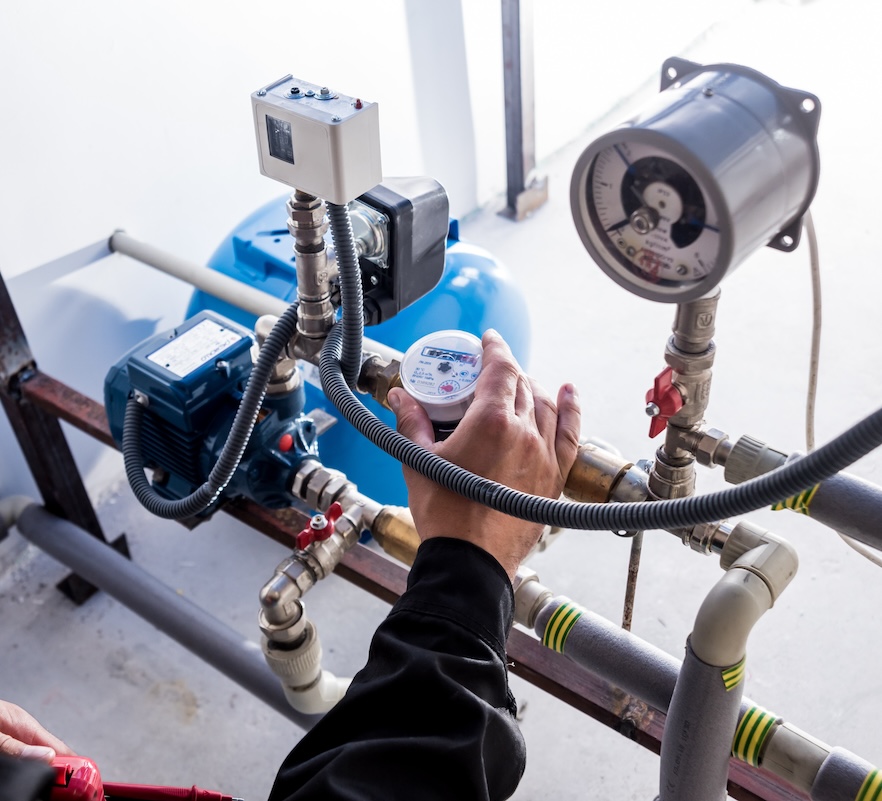
It starts with a survey. A technician walks the property and writes down what's on the wall: brand, model, pipe size, rough age, and whether the radio network still works. You get a unit-by-unit plan with pricing. NES replies within one business day of your request, and the written assessment takes up to five.
Residents get notice before any water is shut off. On a typical install, each occupied unit is without water for under 30 minutes. Our technicians are NES employees, so the person working in the unit works for the company that bills it. They swap the meter, connect it to the gateway, and check that a live read comes through before moving to the next unit. The new reads go straight into the next billing cycle.
Some cities require a licensed plumber or a permit to cut in a new meter. Check your local rules before work starts.
How much does submeter replacement cost?
A battery or transmitter swap costs a fraction of a new meter, and the plumbing isn't touched. A new water submeter, installed, averages $150 to $300 per unit across NES projects. Treat that as a starting range. Pipe size and access move the price more than anything else. A meter in an open utility closet goes quickly. One behind a vanity or a stacked washer takes longer. Doing a whole building in one trip also costs less per unit than replacing meters one at a time as they fail.
Scope
- Costs less
- Battery or transmitter only
- Costs more
- New meter and new plumbing
Access
- Costs less
- Open utility closet
- Costs more
- Behind drywall or under a sink
Volume
- Costs less
- Whole building in one visit
- Costs more
- One unit at a time
Equipment
- Costs less
- Nonproprietary meters with standard parts
- Costs more
- Discontinued models
Coverage
- Costs less
- Meters under an extended warranty
- Costs more
- No warranty
We sell meters at cost, with no markup on the hardware, and we keep them in stock. Most orders ship the next business day. They're nonproprietary, so you own them and any billing company can read them. Optional extended warranties are available on meters NES sells and installs. NES Meter Care covers upkeep after the install, and meters and equipment lists brands and buy or lease options.
Are residents billed while a meter is broken?
NES bills from actual reads. We don't estimate. If a meter is out, the unit is billed from the verified read once it's fixed, and any gap is handled under the lease and your state's rules. Residents never pay for the meter or the repair, since the owner owns the equipment.
Daily wireless reads make this easier. A meter that stops reporting shows up on our end the next day, so most fixes happen before the billing cycle closes.
Which meter brands does NES repair and replace?
NES sells and services water, gas and electric submeters from nine manufacturers, and we work on them no matter who installed them. We keep meters, transmitters and parts in stock, and most orders ship the next business day. The links go to each manufacturer's own support pages, where you'll find manuals and spec sheets.
Badger Meter
- What they make
- Water meters
- Manufacturer support
- Badger Meter support (opens in a new tab)
Cereniti
- What they make
- Electric, water and gas submetering (DataSense Network)
- Manufacturer support
- cereniti.com (opens in a new tab)
Inovonics
- What they make
- Wireless transmitters and networks for submetering
- Manufacturer support
- Inovonics support (opens in a new tab)
Leviton
- What they make
- Electric submeters
- Manufacturer support
- Leviton product support (opens in a new tab)
Master Meter
- What they make
- Water meters, including compact meters for tight spaces
- Manufacturer support
- Master Meter submetering (opens in a new tab)
Neptune
- What they make
- Water meters
- Manufacturer support
- Neptune customer support (opens in a new tab)
Next Meters (formerly NextCentury)
- What they make
- Wireless water submeters
- Manufacturer support
- nextmeters.com (opens in a new tab)
Norgas
- What they make
- Gas and water meters
- Manufacturer support
- norgas.com (opens in a new tab)
Sensus (a Xylem brand)
- What they make
- Water, gas and electric meters
- Manufacturer support
- Sensus support and training (opens in a new tab)
Brand-by-brand notes, like which Inovonics transmitters take a new battery and why older Leviton meters light up when they're wired wrong, are on our submeter brands page.
Product names are trademarks of their owners.
Can NES fix meters another company installed?
Yes. If the meters are nonproprietary, we can usually repair them and read them as they are. Proprietary systems, the kind only the original vendor can read, take more work. Sometimes a new transmitter fits the old meter. Sometimes the meter has to come out. Our page on proprietary and discontinued submeters walks through both.
If the meters are fine and it's the service you're unhappy with, read switching submetering providers first. You may not need new equipment at all.
Related questions
Get submetering and compliance updates
A short email when we publish new guides or a state changes its billing rules. No sales sequences, and you can unsubscribe any time.
We handle your email as described in our privacy policy.
Get your meters reading again
Send your unit count and what you're seeing. We'll reply within one business day, and the survey is free.