Upgrading Manual Submeters to Wireless
Updated October 2026
Still walking the property to read meters? Many manual submeters can take a wireless transmitter, and the rest can be replaced. Here's how to tell which.
Can manual submeters be upgraded to wireless?
Often, yes. If the meter is in good shape and its register can connect to a transmitter, a wireless transmitter goes on top and the pipe isn't cut. If the meter is old or worn, or has no way to connect a transmitter, it's replaced with a wireless meter. The property also gets repeaters and a gateway to collect the reads. After that, reads come in every day, locked units stop turning into estimated bills, and leaks show up the next day. NES retrofits and replaces manual meters as a standalone service, and can take over billing at the same time.
- Many manual meters can take a transmitter
- Adding a transmitter needs no plumbing
- Worn meters get replaced with wireless ones
- Daily reads end estimated bills
- Leak alerts arrive the next day
- New wireless meters average $150 to $300 per unit installed
Manual meters can keep measuring for years. The headache is reading them. Someone walks every unit every month, a locked door turns into an estimate, and a running toilet can go 30 days before anyone sees it.
Why switch from manual reads to wireless?
The obvious reason is the meter walk. With wireless meters the reads come in by themselves, every day, and nobody has to get into the unit.
Daily reads also mean you stop estimating. A unit you couldn't get into used to mean a guessed bill and, often, a dispute. Now there's a real number. And when a resident says a bill can't be right, there are 30 days of reads behind it.
Then there's leaks. MyReads leak detection flags a unit with water running nonstop the next day, instead of when the master bill shows up.
Should you retrofit or replace?
Meter under 10 years old, dry, reading in line with neighbors
- Best move
- Add a transmitter
- Why
- The meter has years left, and no plumbing work is needed
Register supports a pulse or encoded output
- Best move
- Add a transmitter
- Why
- A standard transmitter can read it
Meter over 15 years old, or reading low on test
- Best move
- Replace with a wireless meter
- Why
- A worn meter keeps under-reading with or without a radio
Register has no output
- Best move
- Replace with a wireless meter
- Why
- There's nothing for a transmitter to connect to
Corrosion or a leak at the fittings
- Best move
- Replace
- Why
- The plumbing needs work anyway
The survey sorts this out unit by unit. Plenty of properties add transmitters to most units and replace a handful.
How does the upgrade work?
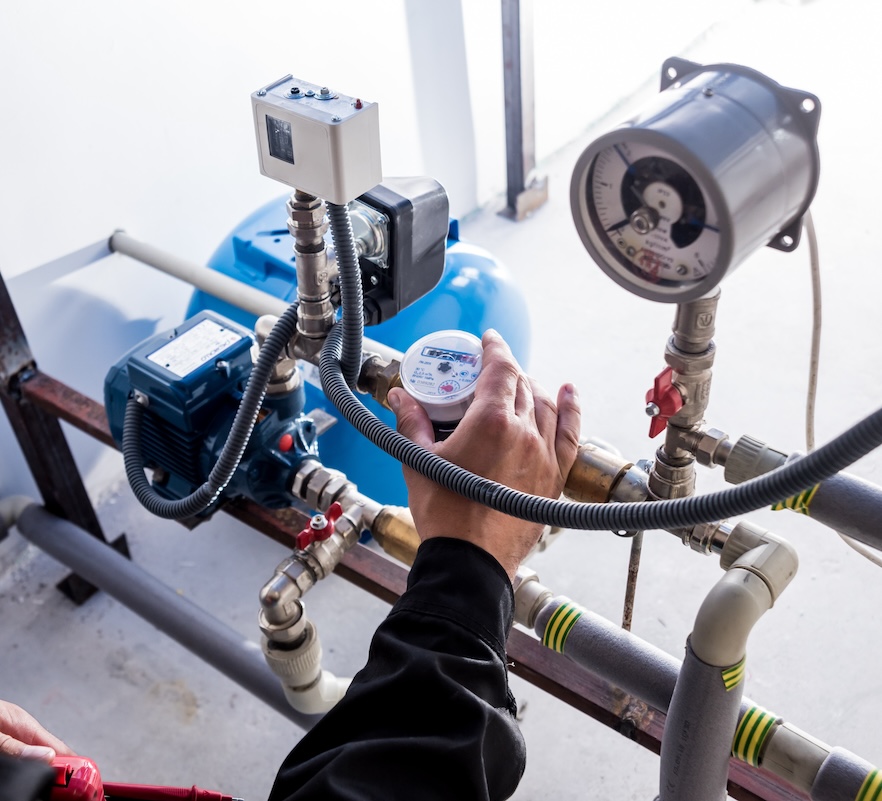
First comes the survey: brand, model, age and register type for each unit, plus where the repeaters and gateway should go. The network goes in before the unit work, so every meter has a signal path from day one.
Then the technicians work through the units. Transmitters go on the meters being kept, and new meters go in where they're needed. A replacement means under 30 minutes without water for an occupied unit. Adding a transmitter usually doesn't need a shutoff at all. Each unit is checked for a live read before the technician moves on.
The next billing cycle runs on wireless reads. If NES is taking over billing too, that switch happens the same month.
How much does a wireless upgrade cost?
Adding a transmitter costs less than a new meter and needs no plumbing. A new wireless meter, installed, averages $150 to $300 per unit across NES projects. Every property is different, so use that as a range. NES sells the hardware at cost, and the equipment is nonproprietary and yours to keep. How much submetering costs has a worked example.
Wireless meters and transmitters come from manufacturers including Badger Meter, Inovonics, Master Meter, Neptune, Next Meters and Sensus. See the full brand list for links to each manufacturer's support pages.
Related questions
Get submetering and compliance updates
A short email when we publish new guides or a state changes its billing rules. No sales sequences, and you can unsubscribe any time.
We handle your email as described in our privacy policy.
Done walking the property?
Send your unit count and the meter brand. We'll reply within one business day.