Types of Submeters: Water, Gas and Electric Meters Compared
Last reviewed October 2026Reviewed by Grant Forehand, Compliance Officer, 20 years with NES
Water, electric, gas and BTU submeters compared: what each measures, who installs it, how it is read, and how to choose the right meter for your building.
What types of submeters are there?
The main types of submeters are water submeters, electric submeters, natural gas submeters, and BTU or heat submeters. Water submeters include positive displacement, multi-jet, and solid-state ultrasonic meters that measure volume in gallons or cubic feet. Electric submeters are solid-state kilowatt-hour meters meeting ANSI C12.20 standards. Gas submeters use diaphragm or rotary mechanisms measuring cubic feet, which are converted to therms for billing. BTU meters combine flow sensors and temperature probes to track energy used by hydronic heating and cooling systems. All types record individual tenant utility consumption past the central utility meter.
Owners of apartment communities, condominiums, and mobile home parks with 80 or more units face large utility bills each month. Different buildings require different meters, communication networks, and reading schedules to divide these bills fairly. You will learn how each meter type works, what the hardware costs to run, and how to choose the right setup for your property.
How a submeter differs from a utility meter
A utility meter belongs to the city or local utility company. It sits at the property boundary, measures the total water, gas, or power entering the site, and generates a single master bill.
A utility submeter sits past that master meter on a dedicated line serving an apartment, condo, or mobile home lot. The submeter records only what that specific unit uses. Your local utility does not install, read, or repair these indoor meters. That hardware belongs to the property owner.
NES never bills residents more than the master bill. Common-area use from the clubhouse, pool, irrigation, and shared laundry rooms stays with the owner.
Types of submeters by utility
Different utilities use distinct mechanical parts to measure flow. Sizing a meter incorrectly or picking the wrong design leads to broken parts, unrecorded slow leaks, and disputed bills.
Water submeters
A water submeter measures volume in gallons or cubic feet. Plumbers size these meters to fit unit supply lines, which are typically 5/8-inch, 3/4-inch, or 1-inch pipes in multifamily buildings. Sizing matters. An oversized meter misses small drips from a leaky toilet flapper, while an undersized meter chokes water pressure at the shower. Every meter undergoes testing for accuracy before it goes into service.
Three designs handle most water submetering:

- Positive displacement meters. An oscillating piston or nutating disc moves inside a measuring chamber. Water fills and empties the chamber, turning a mechanical register with each cycle. These meters catch low flow rates well, which makes them common on indoor lines.
- Multi-jet meters. Water flows through internal ports to spin an impeller wheel. The speed of the wheel matches the flow of the water. These meters tolerate mineral scale and grit, making them practical for outdoor meter pits in mobile home parks.
- Ultrasonic meters. These solid-state meters have no moving parts. Sound waves travel between acoustic sensors to track flow speed. Without gears to wear down, ultrasonic meters keep their factory accuracy for years, though they cost more upfront.
Electric submeters
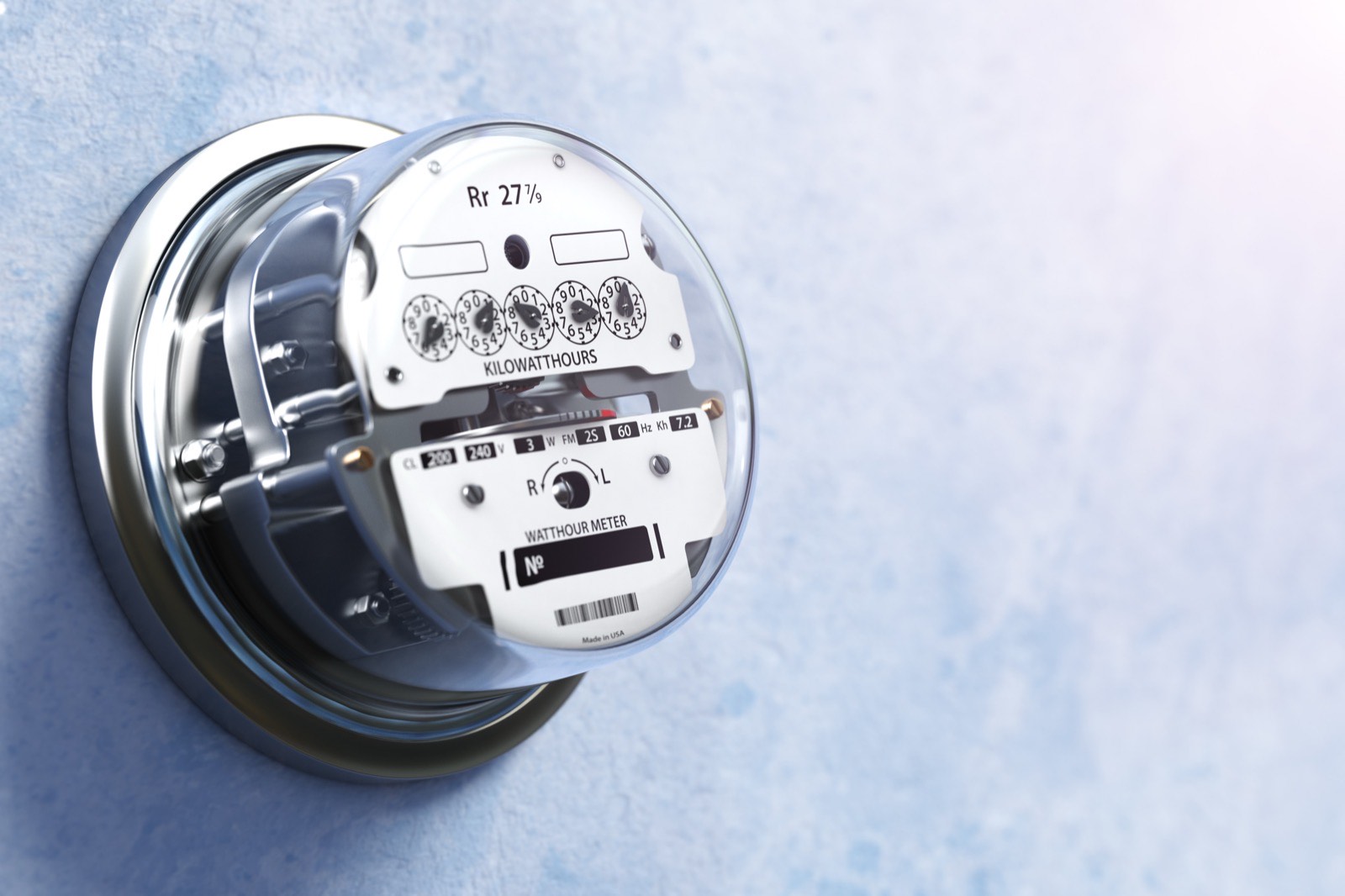
An electric submeter measures power in kilowatt-hours (kWh). Modern units are solid-state digital devices that meet ANSI C12.20 standards. Licensed electricians wire them directly inside or next to unit breaker panels.
These meters handle 120, 208, or 240-volt service in single-phase or three-phase setups. Current transformers clamp around incoming power cables to track electrical load. Many models record interval data every 15 minutes, showing daily peaks in tenant demand.
Gas submeters
A gas submeter tracks the volume of natural gas or propane burned by stoves, unit water heaters, and furnaces. The meter records volume in cubic feet, and billing software converts that number into therms using the heat factor from your utility bill.
Gas meters meet ANSI B109 standards and come in two styles:
- Diaphragm meters. Flexible internal bladders fill and empty as gas moves through valves. This is the standard design for residential gas lines.
- Rotary meters. Machined impellers spin as gas passes through a compact chamber. Plumbers install these where wall space is tight or gas volume is high.
Because gas requires strict safety precautions, these installations need dedicated venting and licensed pipe fitters.
BTU and heat meters
A BTU meter measures thermal energy instead of fluid volume. Properties with central boilers, chillers, or hydronic loops do not have separate water heaters or furnaces inside each unit.
A BTU submeter tracks fluid volume alongside the temperature difference between supply and return pipes. An internal processor calculates British Thermal Units used by the apartment. This lets the property split central heating and cooling costs based on actual use.
Water submeter
- What it measures
- Fluid volume
- Units billed
- Gallons or cubic feet
- Who installs
- Licensed plumber
- Notes
- Positive displacement, multi-jet, or ultrasonic
Electric submeter
- What it measures
- Electrical energy
- Units billed
- Kilowatt-hours (kWh)
- Who installs
- Licensed electrician
- Notes
- Solid-state, ANSI C12.20 certified; uses CTs
Gas submeter
- What it measures
- Gas volume
- Units billed
- Cubic feet (converted to therms)
- Who installs
- Licensed gas fitter or plumber
- Notes
- Diaphragm or rotary; ANSI B109 certified
BTU / heat meter
- What it measures
- Thermal energy
- Units billed
- BTUs or therms
- Who installs
- HVAC technician or mechanical plumber
- Notes
- Measures fluid flow and temperature change across pipes
Submetering equipment beyond the meter
Meters alone do not complete a submetering system. Manual walk-by reads take too much staff time, so properties rely on wireless networks to collect data.
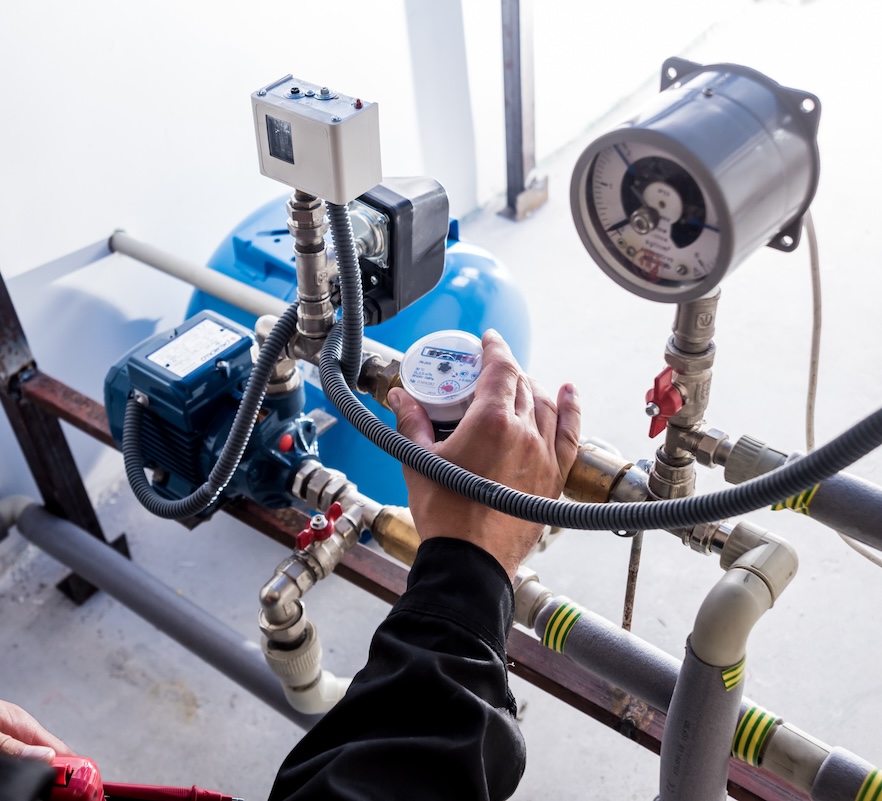
A wireless submetering network uses three hardware components:
- Transmitter. A small battery-powered radio connects to the meter register. It sends consumption pulses across the property using radio frequencies.
- Repeater. Concrete walls, steel studs and subfloors weaken radio signals. Repeaters in halls or breezeways pick up faint signals and pass them along.
- Gateway. A central receiver gathers data from every repeater. It bundles the readings and transmits them to billing software over a cellular link, without touching property Wi-Fi.
Methods for measuring submetering usage
How you collect readings determines how fast you spot leaks.
Manual reading
- How it works
- Staff walk the site, inspect registers, and write numbers on clipboards or mobile apps.
- How often you get data
- Once per month
- Leak detection capability
- None. A running toilet can run unnoticed for weeks.
Drive-by (AMR)
- How it works
- A vehicle with a receiver drives the property roads to pick up short-range radio signals.
- How often you get data
- Once per month
- Leak detection capability
- Very low. The system only collects data on the day the vehicle visits.
Fixed network (AMI)
- How it works
- Repeaters and a cellular gateway transmit wireless readings automatically.
- How often you get data
- Multiple times per day
- Leak detection capability
- High. Continuous flow alerts flag running toilets within a day.
At NES, we install wireless, fixed-network systems. Our meters report readings several times a day through the MyReads leak detection portal. When a toilet flapper sticks open, the software flags continuous flow so your maintenance team can fix it quickly. That stops high water waste before the utility sends its monthly bill.
Which submeter is best for your property?
Every property has unique plumbing and wiring. Choosing your setup involves several practical steps:
- Check plumbing access. Water submetering works best when each unit has a single cold-water line in an accessible closet. When a water heater must be pulled out to reach the pipe, installation costs rise noticeably.
- Avoid proprietary hardware. Some vendors lock meters to their own private reading software. If their customer service drops, you cannot change billing providers without buying new meters. NES installs nonproprietary meters you own, backed by a warranty.
- Pick network types by leak risk. Underground lines and aging indoor plumbing need fixed wireless networks rather than drive-by reads. A single running toilet can waste thousands of gallons before an inspector visits.
- Look at your utility bills. If water is your largest bill, meter cold water lines first. When winter heating runs on unit electric baseboards, electric panel meters make more sense.
- Review local regulations. State, county, and city codes govern resident billing. Texas requires registration with the Public Utility Commission of Texas, while North Carolina requires a certificate from the North Carolina Utilities Commission. When local rules or shared plumbing risers rule out submeters, ratio utility billing (RUBS) allocates bills by occupant count or square footage without new hardware.
Keeping submeters accurate: testing, repair, and replacement
Meters run constantly for years, so hardware needs regular upkeep.
Plumbing meters are tested at the factory to confirm accuracy before installation. Over time, mineral scale and mechanical friction cause water meters to slow down. Slow meters do not overbill residents, but they under-record volume and reduce your utility recovery. Electronic meters have fewer moving parts, but internal lithium batteries and radio transmitters eventually run down.
NES installs nonproprietary meters you own, backed by a warranty. When a battery dies or a transmitter stops reporting, our team handles repairs and meter equipment replacement. Routine maintenance protects monthly cost recovery across every building.
Related questions
Get submetering and compliance updates
A short email when we publish new guides or a state changes its billing rules. No sales sequences, and you can unsubscribe any time.
We handle your email as described in our privacy policy.
Get a free submetering recovery estimate
Submetering installation averages $150 to $300 per unit, and most properties recover that cost in 12 to 18 months. NES handles the work in house, from meter installation and compliance checks to billing and bilingual support. Send us 12 months of utility bills and your unit count and a specialist replies within one business day, with the full recovery model in five. Or call (800) 572-7060.